← Back to news
Project Spotlight & Client Stories
From Insight to Impact: Optimizing the Kauwgomballenfabriek for Energy Efficiency
For many buildings, the path toward energy efficiency begins with visibility: understanding how systems operate in practice and identifying where unnecessary energy is being used. But the real value of building data lies in turning insights into action.


For many buildings, the path toward energy efficiency begins with visibility: understanding how systems operate in practice and identifying where unnecessary energy is being used. But the real value of building data lies in turning insights into action.
At the Kauwgomballenfabriek (KBF) in Amsterdam, owned by Timeless Investments & Tristan Capital Partners, this approach has already delivered tangible results. Through data-driven analysis and close collaboration with operational teams, several Energy Conservation Measures (ECMs) were not only identified but successfully implemented - resulting in measurable reductions in energy consumption and CO₂ emissions.
Kauwgomballenfabriek: industrial heritage meets modern sustainability
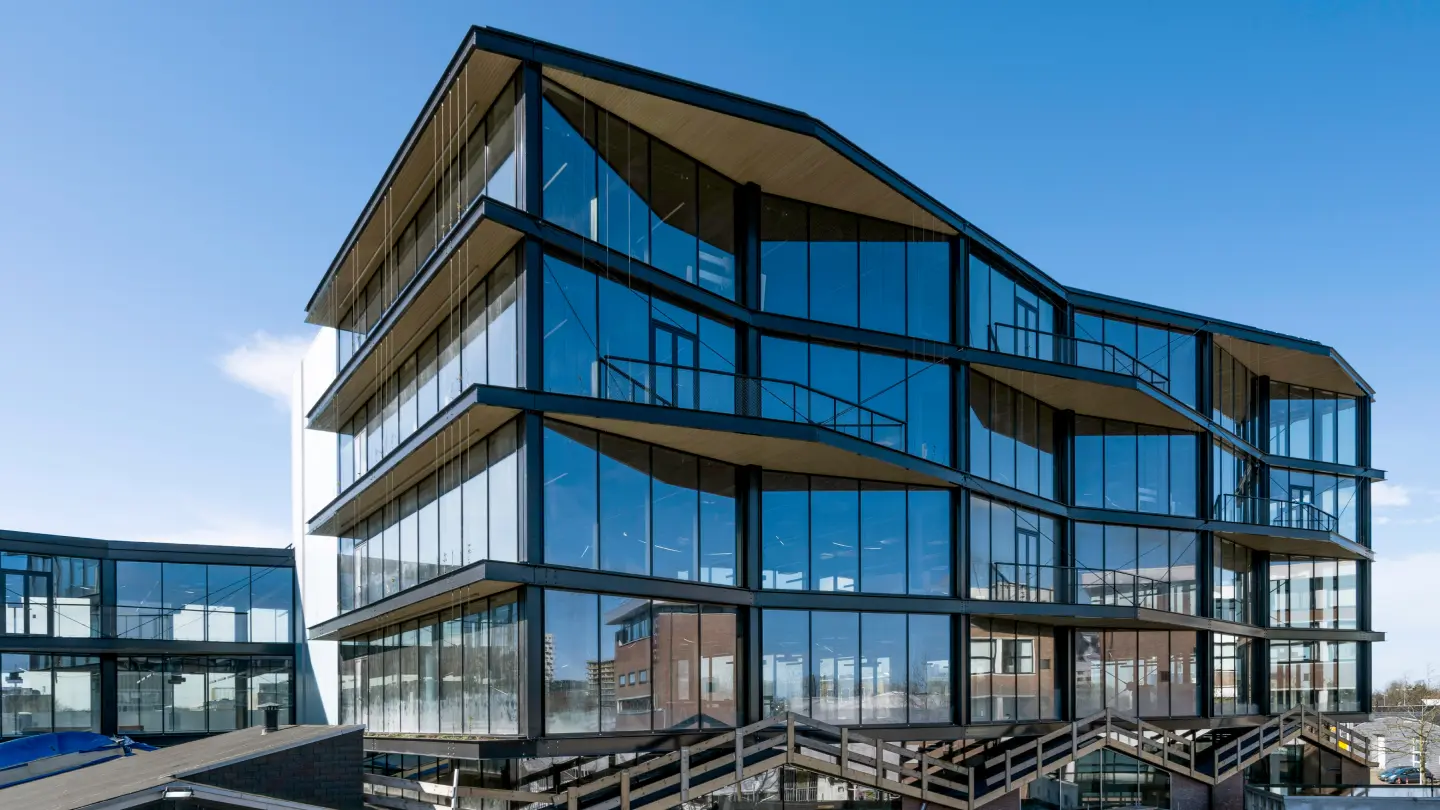
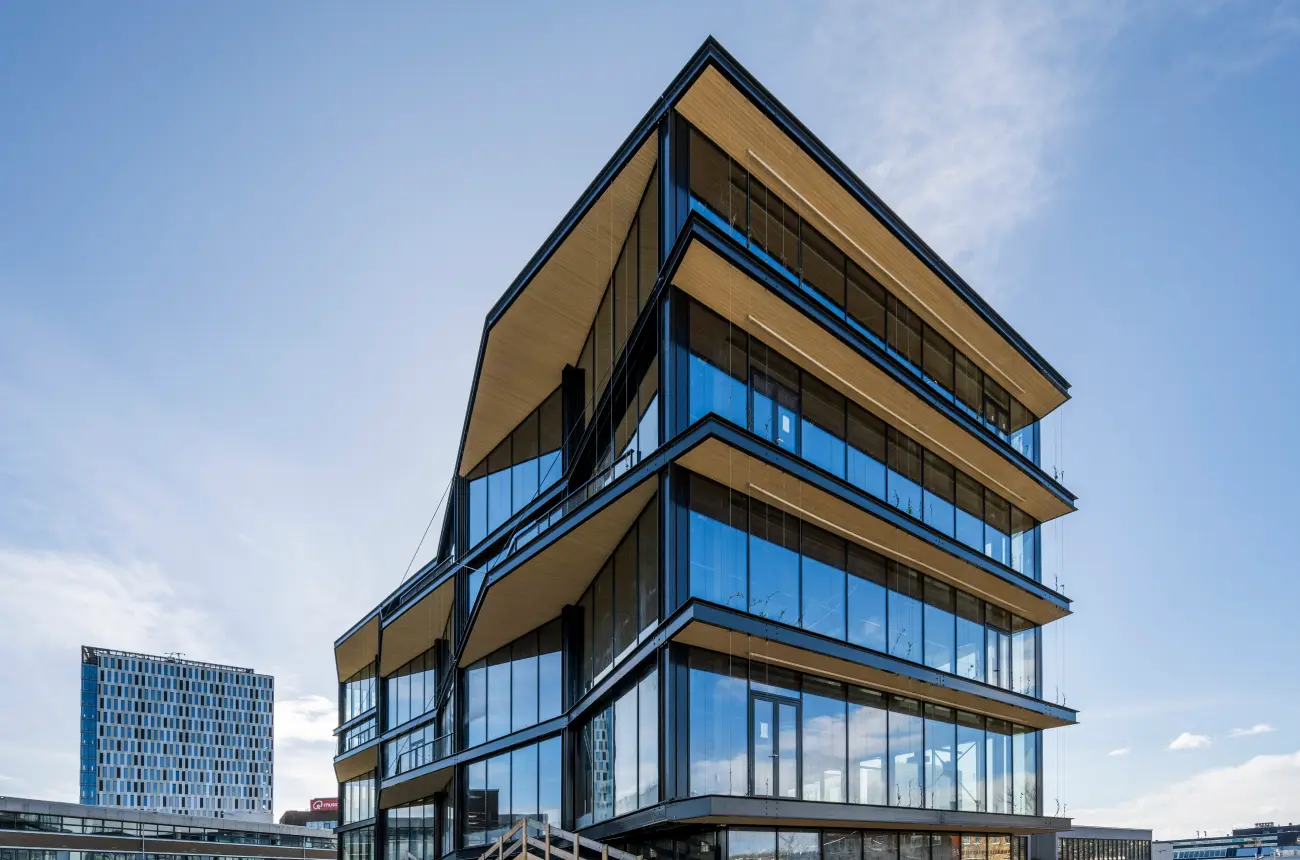
The Kauwgomballenfabriek (KBF) is a distinctive building that blends historic industrial character with contemporary urban functionality.
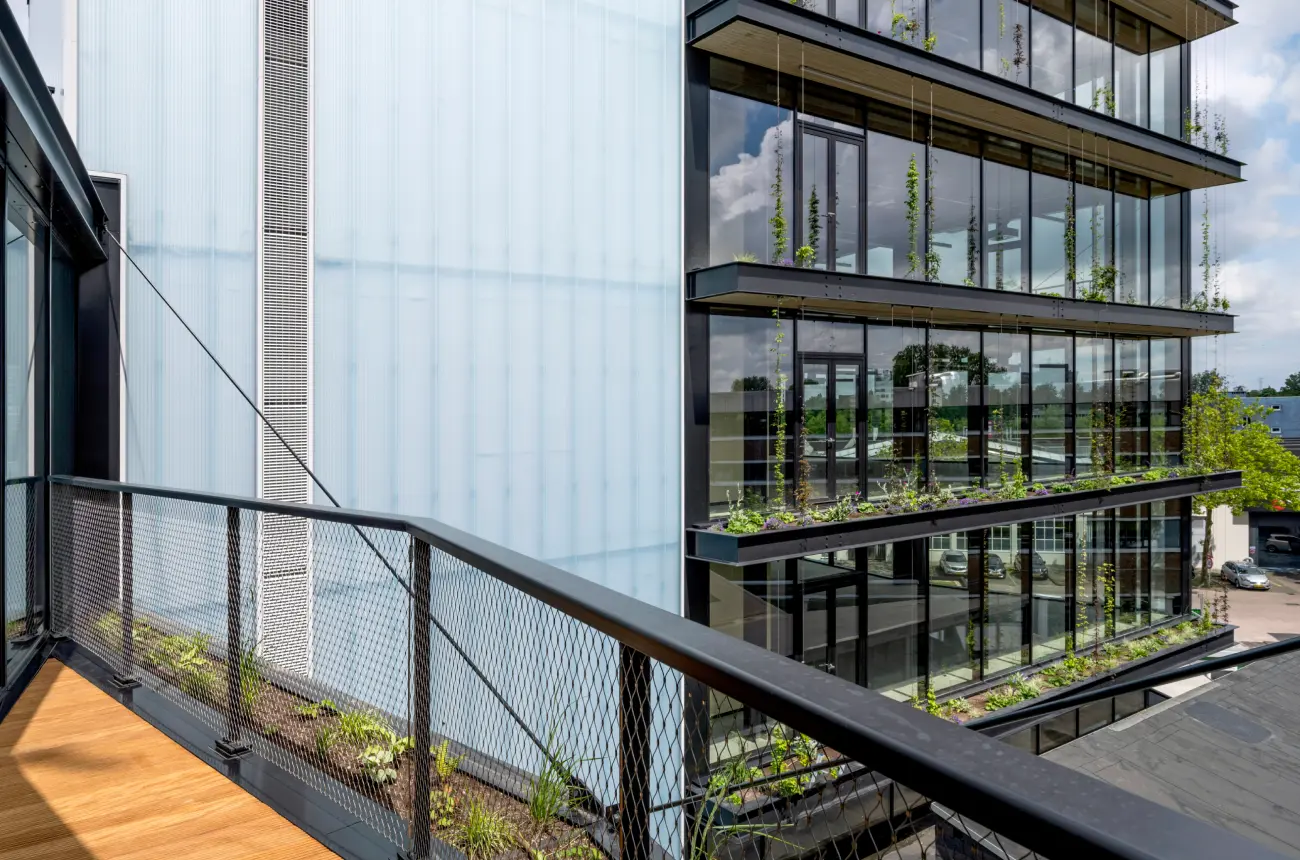
Respecting the site’s heritage, the architectural design reflects the original factory’s recognizable shed roofs. These shapes have been translated into vertical façade elements and balconies, creating a modern interpretation of the building’s industrial past.
Today, the building hosts a mix of office and hospitality functions, contributing to a lively urban environment and supporting the broader vision of Timeless Investments and Tristan to transform the area into a dynamic, future-proof part of the city.
To ensure the building continues to operate efficiently while maintaining high levels of comfort, advanced building monitoring and analytics play a key role.
A data-driven approach to building performance
With Next Sense integrated into the building, operational teams now benefit from continuous insights into environmental conditions, energy consumption, and system behaviour. This monitoring allows the teams to better understand how building systems perform throughout the day and how operational settings interact with occupancy patterns.
Through this data-driven approach, several opportunities were identified to further align HVAC operations with the actual use of the building. Importantly, these insights focus on fine-tuning system operation, ensuring that building systems work as efficiently as possible while maintaining indoor comfort.
Turning insights into measurable impact at KBF
Through continuous monitoring and analysis of the Kauwgomballenfabriek’s building systems, several opportunities for operational improvement were identified. Importantly, these measures were not just theoretical recommendations - they were implemented together with the operational teams and have already delivered measurable results.
1. Aligning ventilation with building occupancy
Analysis showed that the building’s air handling units (AHUs) were running nonstop, supplying fresh air even when few people were present. This highlighted an opportunity to enhance the system’s performance. By adjusting the ventilation schedule to match when the building was actually used, the AHUs were set to operate mainly between 6:00 AM and 6:00 PM.
Impact:
- 51% reduction in HVAC energy consumption for ventilation in vacant areas
- 35,660kWh of primary energy saved annually
- 11.7 tonnes of CO₂ emissions avoided
This adjustment alone accounted for over 5% of the building’s total annual energy consumption, demonstrating how operational tuning can deliver significant impact without requiring physical upgrades.
2. Optimizing climate control in unused zones
Another opportunity was identified in areas of the building that were temporarily unoccupied. By adjusting the temperature setpoint in these zones from 21°C to 18°C, the building continues to maintain stable indoor conditions while reducing unnecessary heating and cooling demand.
Impact:
- 58% reduction in HVAC energy consumption related to heating and cooling in these zones
- 39,300 kWh of primary energy saved annually
- 12,9 tonnes of CO₂ emissions avoided
This measure also contributed to lowering the building’s operational load during working hours.
3. Fine-tuning HVAC control strategies
Further analysis of system data highlighted inefficiencies in the way HVAC equipment operated. For example, supply air temperatures and system setpoints could trigger unnecessary heating or cooling cycles.
Adjusting the supply air temperature curve ensures that ventilation units no longer operate with unnecessarily high temperatures, preventing situations where heating and cooling occur simultaneously and improving overall system efficiency.
Additional analysis showed that some VRF units were running continuously at high fan speeds, even when indoor temperatures were stable. Correcting these control settings helps ensure that climate systems respond more accurately to indoor temperature conditions.
Moving closer to Paris-Proof performance
With these improvements implemented, the building is well positioned to continue progressing toward ambitious sustainability targets. Based on current consumption patterns and the building’s photovoltaic generation capacity, projections indicate that the Kauwgomballenfabriek could reach an Energy Use Intensity (EUI) of approximately 55 kWh/m².
Continued collaboration between owners, operators, and tenants will help ensure the building continues to operate efficiently while maintaining high levels of comfort.
About Next Sense
Next Sense helps real estate owners and operators unlock the full performance potential of their buildings.
By combining smart sensors, real-time monitoring, and advanced building analytics, Next Sense translates complex building data into clear, actionable improvements that reduce energy consumption, lower CO₂ emissions, and improve occupant comfort.
Curious how your building could perform better with data-driven optimization?
Get in touch with Next Sense to learn more.